American roulette has two green pockets (0 and 00) and European roulette has one (0). That single extra pocket nearly doubles the house edge, from 2.70% on a European wheel to 5.26% on an American wheel, while every payout stays the same. You can see the 38-pocket version in action on our free American Roulette game, where Blitz coins have no cash value.
This guide compares the two wheels side by side: pockets, odds per bet, the cost over a session, the special rules some tables add, and what the difference means when you play.
American vs European roulette at a glance
Source: Blitz calculations (exact fractions 2/38, 1/37, 3/38, 1/74); Britannica, “Roulette: House odds”.
The one physical difference: a second zero
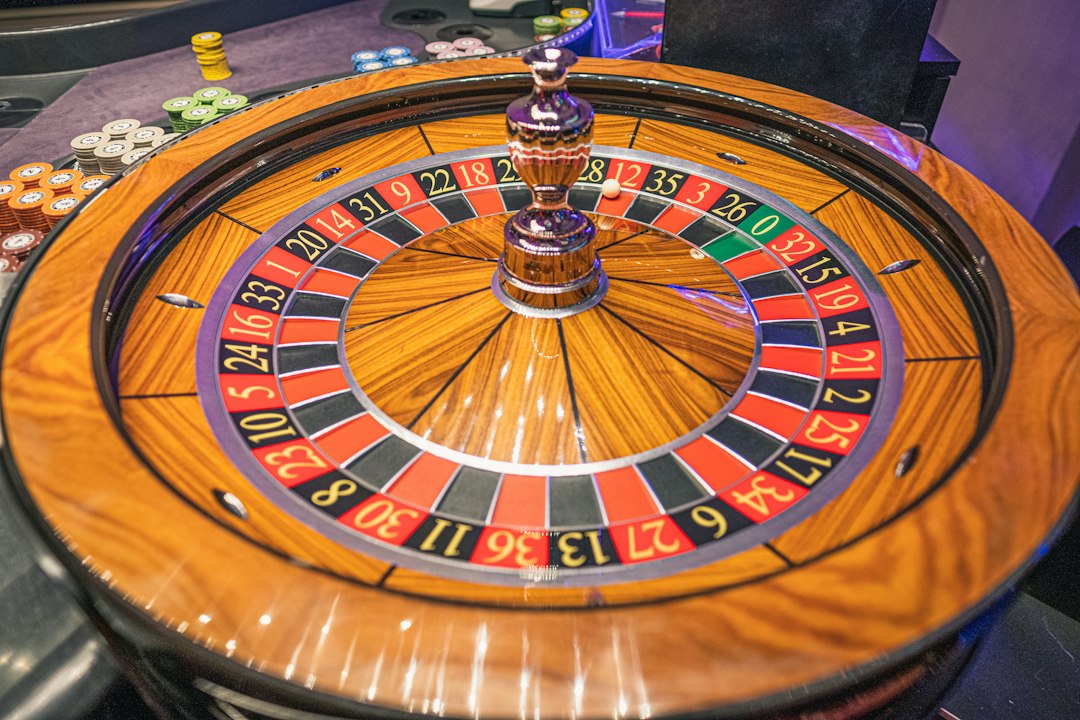
Both wheels carry the numbers 1 to 36, alternating red and black. The European wheel adds a single green 0, for 37 pockets. The American wheel adds a green 0 and a green 00, for 38 pockets. The layout on the table follows the same pattern: the American layout has an extra 00 box at the top.
The numbers also sit in a different order around each wheel. A standard single-zero wheel runs 0, 32, 15, 19 and onward clockwise, while a standard double-zero wheel runs 0, 28, 9, 26. The order does not change the odds of any bet, since every pocket is equally likely, but it is why the two wheels look different at a glance.
Why one pocket nearly doubles the house edge
Roulette payouts are set as if the wheel had only 36 numbers. A straight-up bet pays 35 to 1, so a winner gets back 36 units for 1 staked. On a 36-number wheel that would be a fair bet. The green pockets are where the house edge comes from.
- European: you win 36 units 1 time in 37, so you get back 36/37 of what you stake. The house keeps 1/37, or 2.70%.
- American: you win 36 units 1 time in 38, so you get back 36/38. The house keeps 2/38, or 5.26%.
The same math holds for every standard bet, because each payout is scaled to 36 numbers. That is why both wheels have one flat edge across the board. The ratio between them is 5.26 / 2.70 = 1.95, so “nearly double” is accurate, not exactly double.
Odds and house edge by bet
Payouts are identical on both wheels. Only the chance of winning changes. All figures below are exact calculations, rounded to two decimals.
| Bet (numbers covered) | Pays | Win chance, American | Win chance, European | Edge, American | Edge, European |
|---|---|---|---|---|---|
| Straight up (1) | 35 to 1 | 2.63% | 2.70% | 5.26% | 2.70% |
| Split (2) | 17 to 1 | 5.26% | 5.41% | 5.26% | 2.70% |
| Street (3) | 11 to 1 | 7.89% | 8.11% | 5.26% | 2.70% |
| Corner (4) | 8 to 1 | 10.53% | 10.81% | 5.26% | 2.70% |
| Six line (6) | 5 to 1 | 15.79% | 16.22% | 5.26% | 2.70% |
| Dozen or column (12) | 2 to 1 | 31.58% | 32.43% | 5.26% | 2.70% |
| Red/black, odd/even, 1-18/19-36 (18) | 1 to 1 | 47.37% | 48.65% | 5.26% | 2.70% |
| Top line 0-00-1-2-3 (5) | 6 to 1 | 13.16% | not offered | 7.89% | n/a |
The top line, also called the five-number bet, exists only on the double-zero layout. It pays 6 to 1 on 5 numbers, so it returns 35/38 of your stake and carries a 7.89% edge, the worst bet on the table.
What the difference costs over a session
House edge is an average over many spins. Picture 100 spins at 10 coins each, 1,000 coins wagered in total:
- American wheel: expected loss of about 52.6 coins.
- European wheel: expected loss of about 27.0 coins.
- Difference: about 25.6 coins per 1,000 wagered.
Green also shows up more often. Over 10 spins, the chance that at least one green pocket hits is 41.8% on an American wheel and 24.0% on a European wheel. Any single session can swing far from these averages in either direction.
Table rules that change the math
Some tables add a rule for even-money bets (red/black, odd/even, high/low) when a zero hits:
- En prison (single-zero tables): the bet is held for the next spin instead of lost. Britannica puts the edge on even-money bets at about 1.35% under this rule.
- La partage (single-zero tables): the player loses only half the bet when 0 hits. Half of a 1/37 edge is also 1.35% by our calculation.
- Half-loss on double-zero tables in New Jersey: the state’s rules let Atlantic City casinos take only half of an even-money bet when 0 or 00 hits, at the casino’s option. That cuts the edge on those bets to 2.63% by our calculation.
These rules apply only to even-money bets and only where a table posts them. Our free game uses the plain American rules with no half-back.
How to compare two tables in 4 steps
- Count the green pockets on the wheel: one means European, two means American.
- Check the payouts. Standard is 35 to 1 straight up and 1 to 1 on red or black. Lower payouts raise the edge further.
- Look for a posted en prison, la partage or half-loss rule if you favor even-money bets.
- Skip the top line bet on double-zero layouts, since it costs more than any other bet.
Common mistakes
- Thinking a betting system closes the gap. No pattern of bets changes the edge. Every bet on the wheel has the same 5.26% or 2.70% (the top line excepted).
- Betting on 0 and 00 to “cover” the house. Green bets pay the same 35 to 1 as any other number and carry the same edge.
- Assuming the wheel order matters. It does not affect any probability.
- Reading history into recent spins. Each spin is independent; a wheel has no memory of past results.
Where the two wheels came from
Roulette was devised in 18th-century France. In 1843, François and Louis Blanc introduced the single-zero wheel at Bad Homburg in Germany to compete with other casinos, and the Blanc family later brought it to Monte Carlo. The single-zero wheel spread across Europe, while the double-zero wheel stayed dominant in the United States. Some early American wheels even had a third house pocket marked with an eagle, a tradition that later disappeared.
FAQ
Which has better odds, American or European roulette?
European roulette. Its house edge is 2.70% against 5.26% on the American wheel, with the same payouts.
Do American and European roulette pay the same?
Yes. A straight-up bet pays 35 to 1 on both, a dozen pays 2 to 1 and red or black pays 1 to 1. Only the number of pockets differs.
Is single-zero roulette available in the US?
It can be. New Jersey’s casino rules, for example, cover both single-zero and double-zero wheels. The double-zero wheel is still the dominant version in the United States, so check the wheel before you sit down.
What is the worst bet in American roulette?
The top line bet on 0, 00, 1, 2 and 3. It pays 6 to 1 and carries a 7.89% house edge, compared with 5.26% on every other bet.
Can I win real money playing roulette at Blitz?
No. Blitz is a free social casino and coins have no cash value. If gambling stops being fun for you, see our responsible gaming page or call 1-800-MY-RESET.
Practice it now
Spin the double-zero wheel with free coins in American Roulette and watch how often 0 and 00 land. For the same kind of rule-by-rule breakdown on another table game, read Blackjack Odds and House Edge, or see how slot machines work.