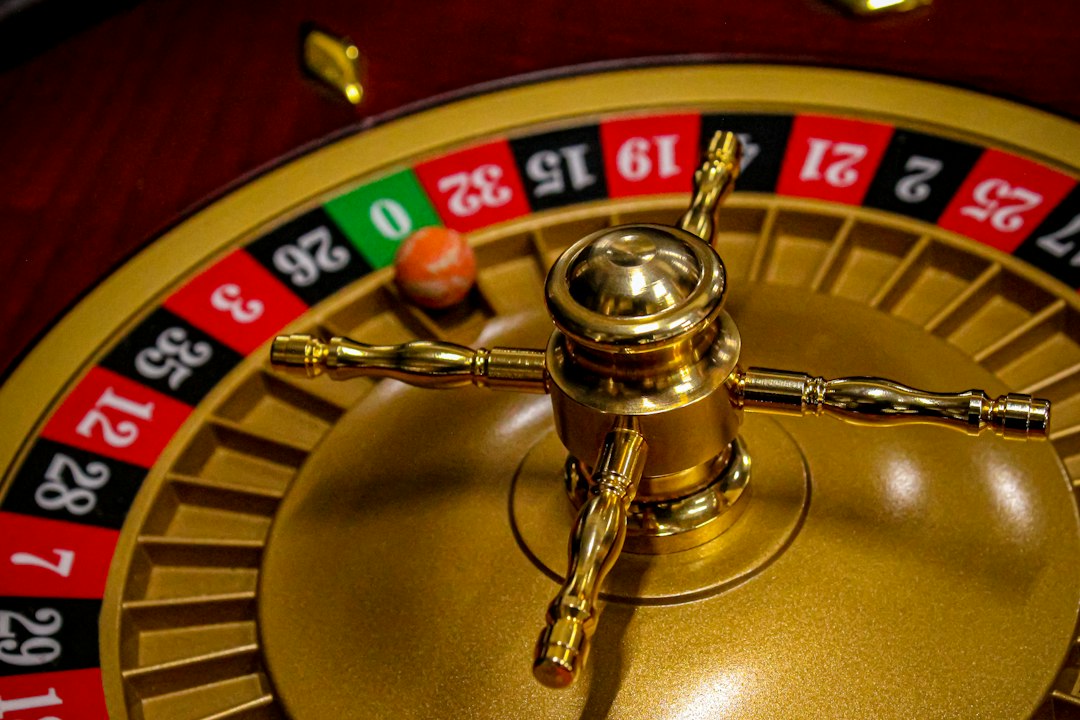
Roulette Systems Tested: Why Martingale Fails
No roulette betting system beats the wheel. We ran five popular systems through 50,000 simulated sessions each on an American wheel, and every one of them lost about 5.26 coins for every 100 coins bet, the same as plain flat betting.
What the systems change is the shape of your results, not the size of the house edge. The Martingale wins small most of the time and then loses big. You can watch it happen yourself on our free American Roulette table, where coins have no cash value.
5 roulette systems, 50,000 sessions each: how often they hit +1,000 coins
Source: Blitz simulation, 10,000-coin bankroll, 10-coin base bet on red, 5,000 max bet, stop at +1,000 or 1,000 spins.
How the Martingale is supposed to work
The Martingale is a family of betting strategies that was popular in 18th-century France. The rule is simple: bet on an even-money outcome such as red, and double your bet after every loss. When you finally win, that one win recovers every earlier loss plus a profit equal to your first bet.
Start at 10 coins and lose three times, and you have bet 10, 20 and 40. Your fourth bet is 80. If it wins, you are up 10 coins. It feels like a guaranteed profit, which is why the idea has lasted for centuries. Casanova wrote in his memoirs that he played the martingale and was soon “left without a sequin.”
Why it fails: two walls and one edge
The Martingale only works with unlimited money and no maximum bet. Real tables have both walls.
- The table limit. On Blitz the maximum bet is 5,000 coins per spin. Starting at 10, the doubling ladder is 10, 20, 40, 80, 160, 320, 640, 1,280 and 2,560. The next step, 5,120, is not allowed. That gives you nine tries.
- Your bankroll. Those nine bets add up to 5,110 coins, more than half of a 10,000-coin balance.
- The house edge. On an American wheel, red wins 18 times in 38 and loses 20 times in 38 because of the 0 and 00. That is a 5.26% edge on every bet, and doubling does not change it.
The chance of losing nine spins in a row on red is (20/38)9, or about 1 in 323. That sounds rare, but each cycle only wins you 10 coins, while a bad streak costs 5,110. Put the two together and each cycle is worth about −5.87 coins on average. If you try to win 1,000 coins this way, you need about 100 successful cycles, and the chance of hitting at least one nine-loss streak along the way is about 27%.
Our test: five systems, same bankroll, same wheel
We simulated each system in Python with the same rules for every session: a 10,000-coin bankroll, a 10-coin base bet on red, a 5,000-coin maximum bet, and a stop when the player was up 1,000 coins, went broke, or reached 1,000 spins. Each system played 50,000 sessions.
- Flat betting: 10 coins every spin.
- Martingale: double after a loss, back to 10 after a win. If the next double is above the 5,000 limit or your balance, restart at 10.
- D’Alembert: add 10 coins after a loss, subtract 10 after a win (never below 10).
- Fibonacci: follow 1, 1, 2, 3, 5, 8… units, one step up after a loss and two steps back after a win.
- Paroli (reverse Martingale): double after a win, back to 10 after a loss or after three wins in a row.
| System | Sessions that hit +1,000 | Average result | Sessions that lost 5,000+ | Lost per 100 coins bet |
|---|---|---|---|---|
| Flat betting | 0% | −527 | 0% | 5.27 |
| Martingale | 73.6% | −962 | 19.3% | 5.17 |
| D’Alembert | 53.7% | −4,022 | 45.8% | 5.28 |
| Fibonacci | 76.4% | −1,506 | 22.6% | 5.30 |
| Paroli | 0.7% | −882 | 0% | 5.28 |
What the numbers say
Look at the last column first. Every system lost between 5.17 and 5.30 coins per 100 bet. That range sits right around the exact 5.26% house edge. No pattern of raising or lowering bets moved it.
The Martingale and Fibonacci reached their 1,000-coin goal in roughly three sessions out of four. That is the trap. Most nights feel like wins, so the system seems to work. But about one session in five ended at least 5,000 coins down, and those losses outweigh all the small wins. The average Martingale session lost 962 coins, nearly twice as much as flat betting.
The reason is volume. The systems that chase losses put far more coins on the table. Flat betting wagered 10,000 coins per session on average. The Martingale wagered about 18,600 and the D’Alembert about 76,100. A fixed edge on a bigger total means a bigger expected loss. The D’Alembert looked gentle on paper and ended up the most expensive system we tested.
The Paroli flips the risk: small losses most of the time and an occasional three-win streak. It almost never reached the goal within 1,000 spins, and it still lost money on average.
Why no betting system can work
Each spin is independent. The wheel has no memory of the last ten results, so a bet placed after a losing streak has the same 18-in-38 chance as any other. A betting system only decides how much you put on each spin. Since every single bet carries the same negative expected value, any combination of those bets does too.
That is also why the wheel matters more than the system. A single-zero European wheel cuts the edge on red to 2.70%, about half the American figure. Our guide to American vs European roulette compares every bet, and what the second zero costs you shows the difference per 1,000 coins bet.
How to use this at the Blitz table
- Try a Martingale with free coins. Open American Roulette, bet 10 on red and double after each loss. Note how fast the bet reaches four figures.
- Count the walls. The 5,000-coin max bet stops the ladder after nine losses from a 10-coin start.
- Compare with flat betting. Play the same number of spins at a fixed bet and compare how far the balance swings.
- Pick your bet for fun, not to win back losses. Chasing losses is the habit the Martingale builds, and it is the one to avoid at any real-money table.
Blitz coins have no cash value, so you can test any system here without risk. If gambling with real money has stopped being fun for you or someone you know, see our responsible gaming page or call 1-800-MY-RESET.
Sources
- Wikipedia: Martingale (betting system)
- Scientific American: The Gambling Strategy That’s Guaranteed to Make Money and Why You Should Never Use It
- Blitz simulation in Python: 50,000 sessions per system; exact figures computed from 18/38 and 20/38.