What the Second Zero Costs You at Roulette
The second zero on an American roulette wheel costs you about 2.56% of every bet you place. It lifts the house edge from 2.70% on a single-zero wheel to 5.26% on a double-zero wheel, so you lose almost twice as fast at the same payouts. Try it yourself in our free American Roulette, where Blitz coins have no cash value.
Here is where that number comes from, what it looks like in coins, and why no bet on the layout avoids it.
The price of one extra green pocket
Source: Blitz calculations from exact odds (2/38 and 1/37).
Where the 2.56% comes from
Every roulette payout is priced as if the wheel had 36 numbers. A straight-up bet pays 35 to 1, so a win returns 36 units for each 1 staked. On a fair 36-pocket wheel, that would break even over time.
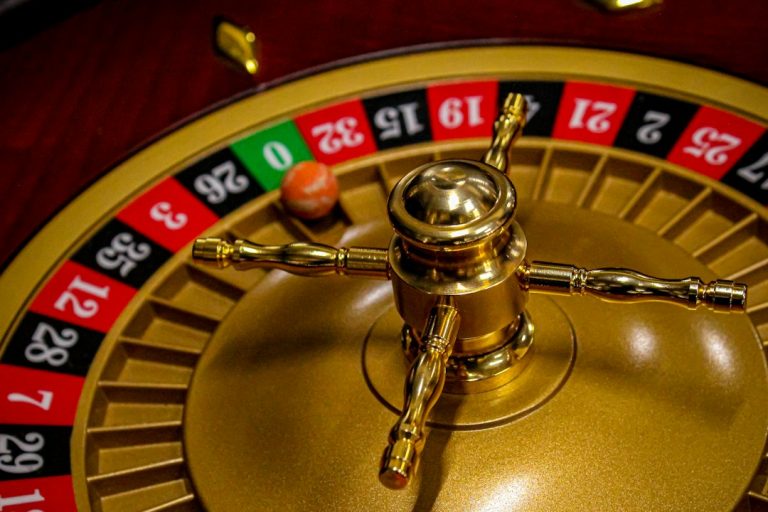
Real wheels add green pockets that the payouts ignore. A single-zero wheel has 37 pockets, so a bet returns 36/37 of its stake on average and the house keeps 1/37, or 2.70%. A double-zero wheel has 38 pockets, so a bet returns 36/38 and the house keeps 2/38, or 5.26%.
The difference is 5.26% minus 2.70%, or 2.56 percentage points. In relative terms, the double-zero wheel takes 94.7% more than the single-zero wheel from the same amount of play. That is why people round it to “double,” though the exact ratio is 1.95.
What it looks like in coins
The cleanest way to see the cost is to count how much play it takes to lose a fixed amount on average.
| Measure | Single zero (37 pockets) | Double zero (38 pockets) |
|---|---|---|
| House edge | 2.70% | 5.26% |
| Return to player | 97.30% | 94.74% |
| Expected loss per 1,000 coins wagered | 27.03 | 52.63 |
| Coins wagered to expect a 1,000-coin loss | 37,000 | 19,000 |
| Chance of red on one spin | 48.65% | 47.37% |
| Expected green results per 1,000 spins | 27.0 | 52.6 |
Those are averages. Over a short session, luck swings results far more than the edge does. Over a long one, the edge is what decides where the balance ends up, and the double-zero wheel gets there almost twice as fast.
We checked the even-money case with a quick simulation: 2,000,000 red bets on a 38-pocket wheel returned 94.77% of the stake, within 0.03 points of the exact 94.74%.
Why every bet pays the same price
It is tempting to look for a corner of the layout that dodges the extra zero. There isn’t one. Each standard payout is scaled to 36 numbers, so each bet has the same 5.26% edge on a double-zero wheel:
- Straight up: wins 1 time in 38, pays 35 to 1.
- Dozen or column: wins 12 times in 38, pays 2 to 1.
- Red or black: wins 18 times in 38, pays 1 to 1.
In all three, the bet returns 36/38 of the stake on average. Betting on 0 or 00 does not help either; each pays 35 to 1 like any other number.
One bet is worse. The top line, covering 0, 00, 1, 2 and 3, pays 6 to 1 on 5 numbers. It returns 35/38 of the stake, for a 7.89% edge. It only exists because of the second zero.
How the second zero survived in America
Roulette took shape in 18th-century France. In 1843, François and Louis Blanc introduced a single-zero wheel at Bad Homburg in Germany to draw players away from rival casinos. The Blanc family later moved to Monte Carlo, and the single-zero wheel spread across Europe.
In the United States the double-zero wheel stayed dominant. Some early American wheels went further, with numbers 1 to 28 plus a 0, a 00 and an American Eagle pocket for the house. That third house pocket later disappeared, but the 00 stayed.
Rules that give some of it back
Some tables soften the zero on even-money bets. Under the en prison rule, offered at some single-zero tables, a bet is held for another spin when 0 hits; Britannica puts the edge on even-money bets at about 1.35% with it. In New Jersey, casinos may choose to take only half of an even-money bet when 0 or 00 hits on a double-zero wheel, which by our math cuts that bet’s edge to 2.63%. These rules never touch straight-up, dozen or column bets.
For a full comparison of both wheels, bet by bet, read American vs European Roulette.
What this means when you play
- No betting system changes the 5.26%. Doubling up after losses, spreading chips or chasing “due” numbers all pay the same price per coin wagered.
- The only lever you control is how much you wager in total. Smaller bets and fewer spins mean a smaller expected loss.
- If a single-zero wheel is on offer at the same limits, it costs about half as much to play.
- Treat roulette as entertainment with a known price. If it stops being fun, see our responsible gaming page or call 1-800-MY-RESET.
Want to see the house edge at work on another table game? Our blackjack odds guide breaks down what each rule costs.